Our Approach
A shared framework for action to prevent veteran suicide.
Preventing veteran suicide is a shared responsibility. Everyone has a role to play in ensuring veterans feel connected, supported, and confident about their futures.
Our Pillars
Guided by Face the Fight’s 2026–2028 Strategic Plan, our approach is built on four pillars:
- Uniting a cross-sector coalition
- Scaling proven suicide prevention solutions
- Dismantling mental health stigma
- Strengthening support systems that protect and honor those who have served
-p-1600%20(1).jpg)
%20(1)-p-2000.jpg)

Through quarterly coalition meetings, webinars, and town halls, Face the Fight is fostering a powerful collaboration between businesses, philanthropists, nonprofits, and government to amplify the mission, share best practices, and elevate resources.

Dynamic Data Modeling
Dynamic data modeling is a proven decision-support tool that helps guide investments and actions to address complex public health challenges like suicide. By supporting strategic decision-making, tracking progress, and allowing for real-time adjustments, it ensures that resources are directed where they can make the greatest impact. Using this approach, Face the Fight has a goal to save an estimated 10,900 lives saved by 2032.
*This figure is driven by the Face the Fight dynamic data model and is established in coordination with our Scientific Advisory Committee based on an expected philanthropic giving budget.
Evidence-Informed Interventions
Face the Fight follows a public health approach, which asks questions like: What is the problem, what is the cause, what works, and how do we implement it?
Face the Fight focuses on the seven identified evidence-informed strategies that can be paired with evidence-informed interventions.
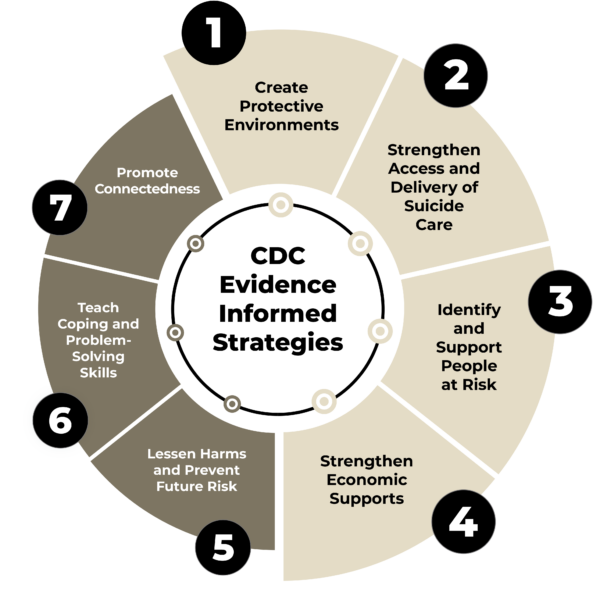
This public health approach goes beyond individual interventions, focusing on analyzing data to identify risk factors, developing prevention strategies, and creating support systems and resources for those in need. By promoting mental wellness, reducing stigma, and advocating for positive societal changes, this approach aims to build a caring and supportive community, ultimately working together to prevent suicide and protect the well-being of everyone.
Such interventions are marked by rigorous scientific scrutiny and focus on well-researched treatments, like those confirmed through randomized controlled trials. These are the gold standard, recommended when strong empirical evidence supports their effectiveness and safety. The process involves systematically reviewing existing research to identify interventions that work best for particular conditions or issues, such as suicide prevention interventions proven to reduce suicide attempts.
Focus Areas
These focus areas highlight the evidence-informed strategies we are advancing to prevent veteran suicide.
Reducing firearm-related suicides involves a multifaceted approach at both clinical and community levels. The goal is to encourage safe and secure storage of firearms and, when necessary, temporary, voluntary removal of firearms from their immediate surroundings. This approach has been well-received by veterans and emphasizes respecting individuals’ autonomy in decision-making.
A commonly recommended approach for suicide screening involves the use of efficient evidence-based tool(s) in both community and healthcare settings. This practice is recommended irrespective of whether the person is seeking care and/or help specifically for mental health concerns.
- For example, validated suicide risk screeners include the Columbia Suicide Severity Rating Scale (C- SSRS) and the Patient Health Questionnaire – 9 (PHQ-9).
Managing suicide risk is focused on ensuring that veterans can survive their darkest moments. Interventions are focused on reducing risk factors related to suicide, including increasing social connections, treating psychiatric diagnoses, incorporating means safety strategies, and engaging in safety planning.
- For example, Crisis Response Planning (CRP), Lethal Means Safety (LMS), and Safety Planning Intervention (SPI) are brief, collaborative interventions aimed at reducing acute suicide risk.
Treating suicidal veterans involves the clinician and the individual working collaboratively on identifying and resolving internal and external factors unique and intrinsic to the veteran’s suicide risk.
- For example, cognitive behavioral therapies are the most effective intervention methods for reducing and preventing suicidal thoughts and behaviors.
Blueprint for the Next Phase of Impact
We believe in a future where every veteran feels connected, valued, and empowered. The future is not written yet, but with your help, we’re shaping one that’s full of hope.